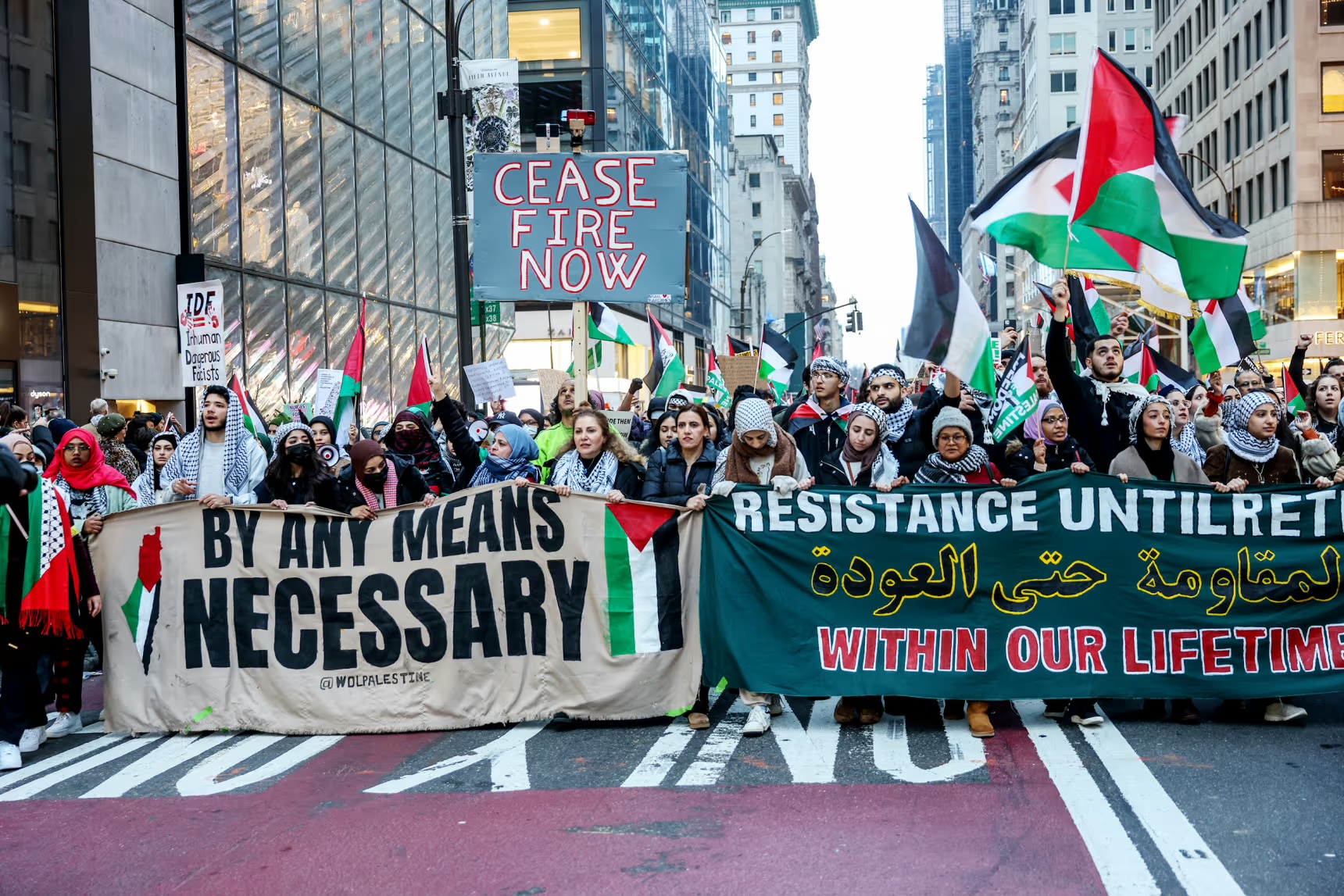
The Responsibility of Interpretation, a Forced Identity Crisis, and Why its "Free Palestine by Any Means Necessary"
(For context on the current fence drama, see the excellent report done by The Tartan, CMU’s student newspaper)
My only real issue with being at CMU over the summer is the weather (like usual). The mustiness of Western Pennsylvania heat, sometimes scorching, makes me feel like I’d rather be working for some startup in the Bay, vacationing in Hawaii, or doing a SWE internship in Seattle (I’ve actually never been to any of these places…). But then, I remember how easy it is to focus on research during the day, how relaxing evening runs through Schenley Park are, or how aesthetic the farmers market on Beacon Street is. The campus/city has a quiet but not lonely feel, and it’s refreshing.
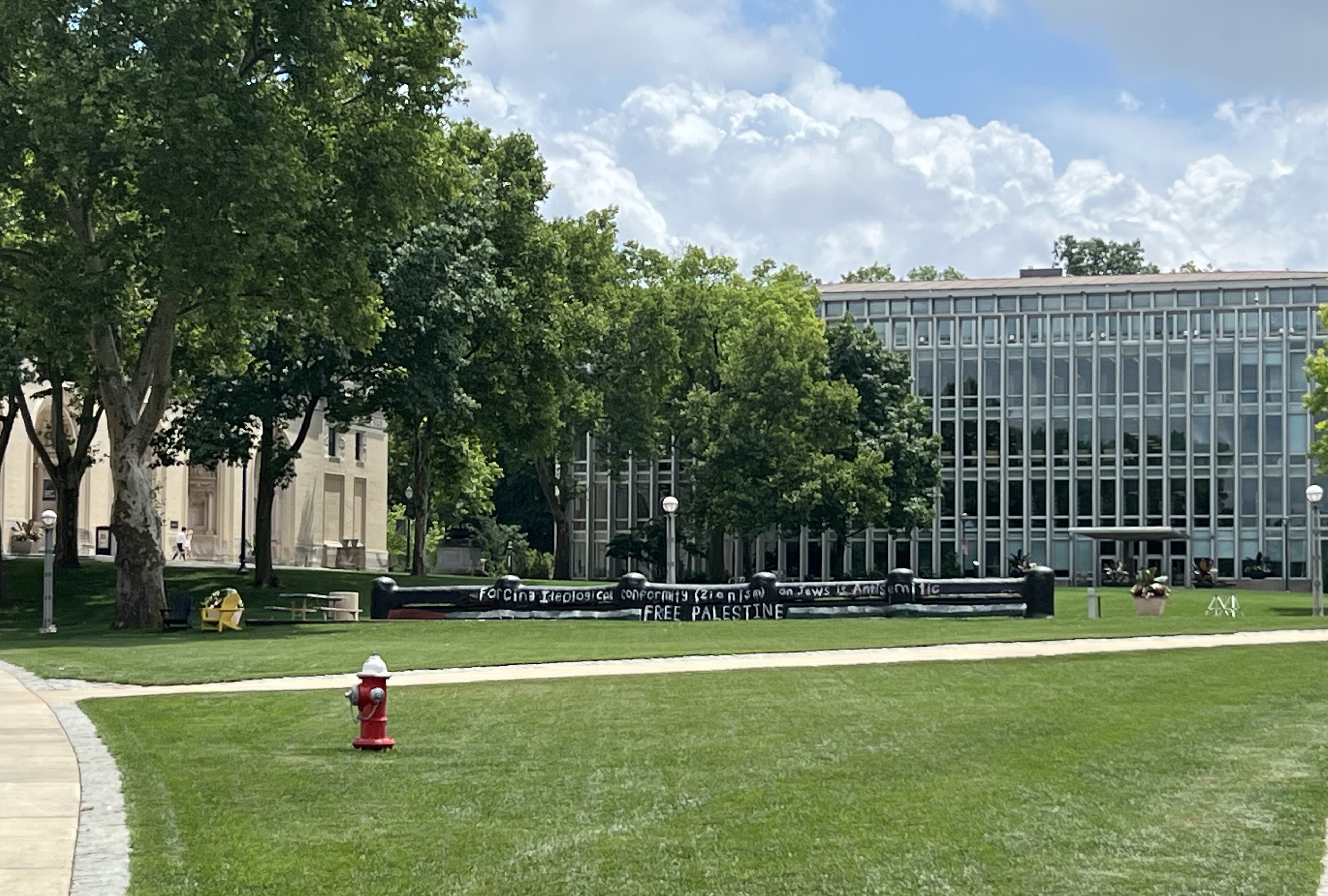
If one reads the email from CMU President Farnam Jahanian with the subject line “Condemning Threatening Language on the Fence and Reaffirming Our Community Norms”, they might think this peace was disrupted. With “Free Palestine” boldly painted on the front of CMU’s Fence, and the subtly written “by any means necessary”, one might think that I, as a Jewish CMU student, felt that my sense of safety and belonging was threatened. But when crossing the campus after a UC gym sesh to Gates, I simply smiled and kept walking. It actually wasn’t until later, when my campus-summer bliss was broken by the email report from Farnam.
Right now, CMU’s Fence1, the iconic campus landmark that serves as a canvas for student expression, club pride, and community tradition (TLDR for non-Tartans: it’s the fence that student groups can paint with certain messages), is going through a bit of a yearlong identity crisis after recent incidents regarding political messages and alleged university censorship. While there is much discussion to be had about this ongoing fence drama, this piece isn’t about CMU politics. This piece is about the interplay between my personal lifelong identity crisis and the greater century-long conflict2, which includes ethnic cleansing34, terrorist attacks567, colonialism8, genocide/ responses to genocide91011, intense lobbying12, and, of course, all the -isms and -phobias13. Since the latter requires much more than a Substack post can cover, I’ve left resources where you can learn more about why I used each “big word”.
The All-Too-familiar Email
My first response to the email was anger, but also a sense of inevitability. It’s not the first time that anti-zionist speech has been called antisemitic, nor the first time pro-Palestinian activists on college campuses were cast as some kind of sleeper-agent jihadists. Okay, those words might be a bit hyperbolic, but take a moment to read the email yourself:
Early last week, a message was painted on the Fence referencing the history of the crisis in the Middle East and including the phrase “Free Palestine.” Late Friday afternoon, we learned that a smaller section — the top of one post of the Fence — included the phrase “by any means necessary.”
As part of our immediate response, CMU Police launched an investigation, which ruled out any imminent danger to our community but remains ongoing. At the same time, we heard from members of our campus and the broader Pittsburgh community who shared that the connotation of “by any means necessary” was antisemitic and threatened their sense of safety and belonging. Others described the phrase as inciting or supporting violence.
While the Fence has since been repainted to celebrate the Knicks NBA title win, I want to be clear: It is categorically unacceptable for an anonymous message painted on CMU property to incite or imply support for violence, and it is equally unacceptable for members of our campus community to feel physically threatened or unsafe
[Disscussion about the fence and university admin about the fence]
— Farnam Jahanian, 2026,
We’re coming up on the two-year anniversary of the mass wave of pro-Palestine college protests. This email served as a reminder that, though discourse around Israel/Palestine has changed in the past two years, there are still subtle continuities in how administrations discuss these instances. While Farnam, to his credit, never called the message itself antisemitic (come on, it’s not the 2010s), he did:
- Announce that a CMU Police investigation was launched (and obviously ruled out imminent danger),
- Relayed messages from anonymous members of the CMU/Pittsburgh community calling it antisemitic and threatening their sense of safety/belonging
- Stated that it’s unacceptable to “incite or imply support for violence” and make community members feel “physically threatened or unsafe”.
This all felt like the new way that pro-Palestine people and messages are called antisemitic, condemned, and suppressed; since Israel and its actions against Palestinians are widely unpopular, the aged method of directly labeling pro-Palestinian messages as antisemitic isn’t as effective. Often what happens is that strong rhetoric is criticized as “controversial”, messages are stretched to fit other narratives, individuals speak for larger groups, and there’s an overall push for “neutrality”.
While I don’t believe Farnam wrote this email in bad faith, the specific language used in his email continues to reinforce claims that supporters of Israel have used to suppress pro-Palestinian speech and enable American support for the state’s actions. As previously stated, this reinforcement is subtle, and it takes lots of time to decompress. So if you’re still with me, let’s get started.
The Responsibility of Interpretation
“If you’re not careful, the newspapers will have you hating the people who are being oppressed, and loving the people who are doing the oppressing.” - Malcom X
The idea that “Free Palestine by any means necessary” implies a violent antisemitic connotation subtly makes two assumptions: It assumes that a group of American university students believes that violent acts are a part of these “necessary means” and that attacks against Israel/Zionism are fundamentally antisemitic.
Especially since these claims are being leveraged against Pro-Palestinan supporters, I believe that assumptions like these are both bad faith and much more harmful to community discourse. After lots of talks with friends, I learned that this was more of a unique take. So let me explain my rationale:
The Violence Assumption
The first assumption is that the people who wrote the fence are supporting or inciting dangerous acts. The phrase “by any means necessary” is often linked to Malcom X and the idea of support for taking violent actions (if necessary) to fight against racial oppression. However, this was a narrative pushed by the media (remind you of any current situation) and doesn’t align with what Malcom really said. As Malcolm X stated many times, he never supported initiating violent actions, and the violent acts he spoke of were acts of self-defense14. It must also be emphasized that when “by any means necessary” is used in the past, it refers specifically to groups facing that oppression now, not to those in another country or state in life who are against what’s occurring.
So I don’t believe in violence—that’s why I want to stop it. And you can’t stop it with love, not love of those things down there, no. So, we only mean vigorous action in self-defense, and that vigorous action we feel we’re justified in initiating by any means necessary. Now, the press, behind something like that, they call us racist and people who are “violent in reverse.” This is how they psycho you. They make you think that if you try to stop the Klan from lynching you, you’re practicing “violence in reverse.”
— Malcolm X, 13 February 196515
While historical analysis can only provide so much, one interesting narrative emerges here. This idea of real intent versus forced intent. In the case of Malcom X, who was always portrayed as an extremist, there is much more nuance when you read his statements. If you understand the violent pushback that early civil rights groups were under in the 1960s, then the discourse around whether to take violent action, by literally fighting back against the KKK attacks, is a lot different from openly advocating violence and “any means necessary” when fighting back against racial oppression.
Moving beyond historical interpretation, I think this highlights the need to contextualize the current Israeli-Palestinian conflict and the situation of a pro-Palestinian activist on CMU’s campus. While I don’t have the space to contextualize what led up to Hamas’s Oct 7th terrorist attacks, let’s start with these attacks since that’s when most current attention to the conflict started. After the brutal 2023 attacks, Israel and Hamas entered into a new violent conflict, and this conflict spilled over into neighboring countries around Israel. Since then, Israel has seized more land from its neighbors than it has in decades16. While each of these attacks is nuanced and contains violent actions from “both sides”, as of 2026, Israel is committing war crimes, if not genocide, in Gaza and supporting ethnic cleansing in the West Bank. While one might not agree with these labels, readers should look no further than the numerous Israeli politicians who openly support these actions, like Israeli Defense Minister Israel Katz, who openly calls for a second Nakba (the 1960s, and what many consider ongoing, expulsion of Palestinians from Palestine). This sentiment also leaks into public sentiment; over 82% of Israelis support the “transfer” of Gazans to other countries, 56% support the forceful transfer of Arab citizens of Israel to other countries, and 47% support that the IDF should use tactics similar to the biblical story of the conquering of Jerocio, in which the Israelites killed all its inhabitants17.
I say all this to emphasize the dire need for action. Pro-Palestinian supporters feel a sense of urgency and responsibility; a sense that the drawbacks of certain actions are necessary. While a college student can’t affect what Hamas, Hezbollah, or the Iranian government does, this isn’t necessarily true with Israel. With the United States Government directly supporting these actions and numerous US institutions (including CMU) with direct ties to Israel, there is a set of actions one can take and advocate for to help this cause. Whether it’s launching a divestment campaign against Israeli corporations that supply the military or operate in occupied territories, removing partnerships with Israeli corporations or universities that are supporting these actions, speaking out against weapon sales and defense supply, and even speaking out/protesting to raise public awareness. All of these actions can be targeted at their University, the local state government, or the federal level. It should be emphasized that most university groups do these things without advocating for violent action. While some groups in history commit violent and gruesome actions in defiance of the Israeli state and Zionism, why is it automatically assumed that students of Carnegie Mellon University in Pittsburgh, Pennsylvania, United States are a part of these groups? During the height of the Pro-Palestinian college campus protests, over 99% remained peaceful, according to a study by ACLED18. I think in this case, jumping to violence speaks more about the accuser and less about the accused.
The Antisemitic Assumption
The second assumption that one makes is that these attacks against Israel/Zionism are fundamentally antisemitic. This all rests on how one defines Zionism and views the Israeli state, making the critique of this assumption much more complex than the prior. This isn’t because it’s more nuanced, but because there’s been an almost century-long campaign to reframe the facts here. Many believe that Zionism is simply the belief that the Jewish people have a right to exist, and at face value, this definition isn’t necessarily wrong. However, assisted by the 1990 findings of new historians, historical analysis contradicts many of Israel’s foundational myths (the set of narratives and ideologies used to both establish and legitimize Israel’s foundation). Suddenly, a commonly believed phrase like “A Land Without a People for a People Without a Land”, which characterizes Palestine as an empty land, unoccupied by Palestinians, is put under more pressure. These findings are significant to me because they spark a new interpretation of Zionism. For one, Zionism is now mostly viewed as a 19th-century movement that advocated for a Jewish state in the ancient homelands of Israel and what was then Palestine. This movement advocated for not only a Jewish state (thus, an ethnosuprmasist state) but also for that state to be in a land where people already existed. As Israeli historian Ilan Pappe and intellectual Noam Chomsky discussed in the now influential book On Palestine, the early roots of the Israel-Palestine conflict trace back to early Zionist settler-colonialism, in which the Zionist settlers disregarded Palestinian ownership of the land and, after the establishment of the state, violently expelled Palestinians from their land at various times throughout the late 20th century19. In the modern day, the international community (courts, international human rights groups, etc) broadly classifies that since the 1967 Six-Day War, Israel has occupied all of the Palestinian territories with violent repercussions and contorl over local governance20.
This view of Zionism, the one as the movement and ideology that advocates for an ethno-supremacist state in the modern location of ancient Israel, starkly contrasts the basic, reductive view one might have. So when one comes out and says “free Palestine by any means necessary”, from this perspective, contrary to what the ADL states, it doesn’t directly mean that Jewish people dont deserve self-determination; it’s targeting an ethno-supremacist state apartheid regime (due to Jewish supremacy in Israel), occupation of a foreign country, and warcrimes/genocide in other territories. Also, while these are debated views on the issue, the connection between antisemitism and anti-zionism is also dangerous for Jewish people. Connecting criticism of a foreign government’s actions to prejudice against a group of people only leads to direct prejudice, especially in the case of Israel-Palestine. So not only do I believe that Farnam’s echoing the idea that what was painted on the fence was antisemitic is invalid, but I believe that platforming it will only lead to more antisemitism and will invalidate real antisemitism.
The final point i’ll make is one that I dont see often addressed. Many Anti-Zionists, under this prior stated view, believe that states should be founded on equal rights rather than on religious/ethnic status, and dont believe in a Jewish state. However, this view is advocated for on a worldwide scale, with criticism towards other Middle Eastern countries like Saudi Arabia, and directly calling out other genocides, like the one in Sudan. The main difference between criticism of Israel and other states is that we, as both CMU students and American citizens, have much more control over Israel than we do over other countries. While there are a million issues to cover, I dont think the common remark that pro-Palestinian activists are being “selective” with their outrage is again just dishonest; there’s context and reasons why Israel/Palestine is in the limelight more. The history of lobbying in the US/UK directly enabled Zionism to exist, and more Americans have these default, and what many would classify as misinformed, views of Israel. Whereas your average American might not even be able to point out Sudan on the map. Again, this doesn’t discredit the other atrocities in the world, but I wanted to comment on this since it’s commonly used to go against general pro-Palestinian speech, sort of as a gotcha.
Consequences of Assumptions
I believe this section highlights our responsibility in a community to interpret what is being conveyed fairly and not jump to any conclusions. I’d argue this responsibility for interpretation is just as important as Farnam’s beloved responsibility for speech (which he references often).
To me, “free-palestine by any means necessary” is both a commitment to advocating for the widely held belief in human rights and to doing whatever is possible, even if it has negative consequences like decreased funding, research connections, etc., to make an impact. The idea is that actions like divestment, the removal of partnerships, and boldly primarying pro-Zionist establishment Democrats do have consequences, but those consequences are worth it.
However, these are just my viewpoints, with which one is free to disagree. I think this is the point of painting the fence and having university platforms. One doesn’t go to a university to hear ideas that don’t challenge one’s inner views. The point of growing in academia is to hear differing opinions, both ones you agree with and disagree with, gain the ability to analyze and contextualize them, and then update your views accordingly.
I believe that the classification of the fence speech (outside of the later “death to Zionism” painting) as violent and antisemitic is dishonest and touches on a deeper struggle I’ve had my whole life. While I generally believe that discussing the prior points is more important, since the university took messages from the community about how the fence made them feel, I wanted to take a moment to talk about how the response to the fence made me feel.
A Forced, and Recurring, Identity Crisis
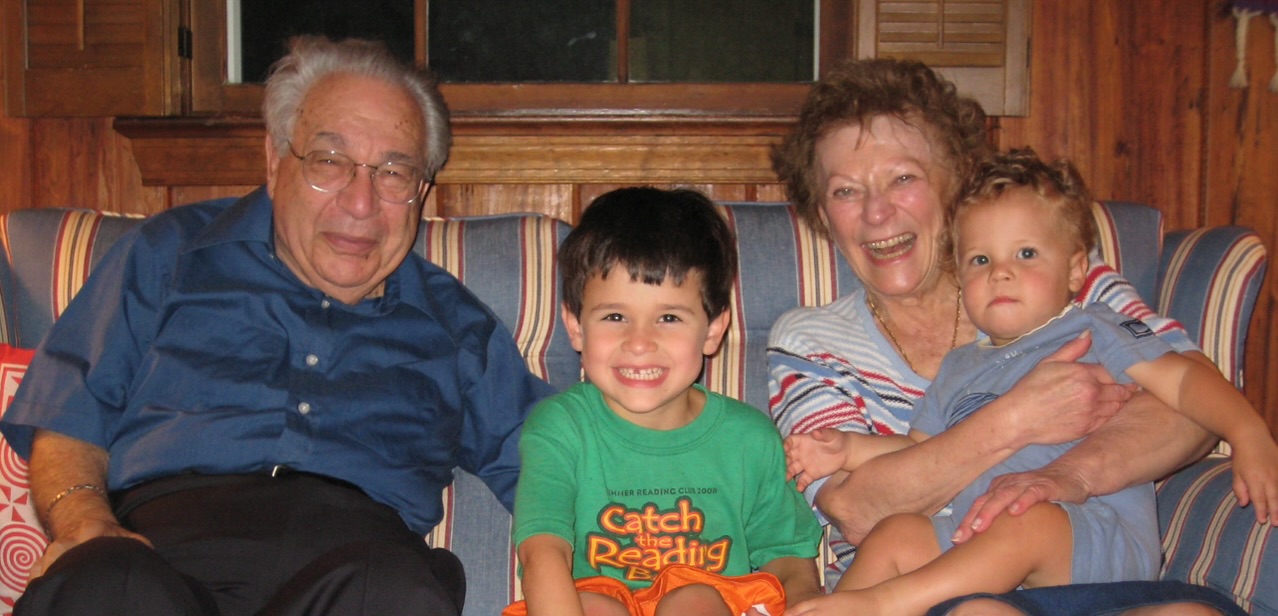
To me, reading Farnam’s just felt like another time that I was told how I should feel about something that “targets” my identity. While I dont know these “members of our campus and the broader Pittsburgh community,” my mind began to paint them as part of a very familiar force in my life that’s pushed me away from who I am. Being half-Jewish from my dad’s side, attacks on my belonging in the Jewish community have predated my entire existence, as according to Jewish Scripture, Judaism is passed through maternal lineage. These attacks are common in the Jewish community, even for full jews. My parents always recount how Grandma was treated by the orthodox Jewish community when many of them moved into her area. “They made me feel like I wasn’t Jewish”. For me, these feelings started with an insecurity about how “Jewish” my upbringing was. Whether it was the early passing of my paternal grandparents (who spent most of their final years raising my brother and me, instilling us with Jewish values and culture) or my dad’s own inner conflict with the community (for marrying a non-jew), I very quickly understood the idea that I wasn’t a normal jew.
Luckily, I grew up in an area with both lots of Reform/Conservative (sects that allow people like me) Jews and non-secular but proud Jews (those who identify as culturally and ethnically Jewish), so I would be able to fend off these ideas as I got older. Whether it was loving locs and bagels, weirdly resonating with Larry David, understanding the importance of studying and debating, or just having the last name “Friedman”, I quickly self-identified as a proud Jew as I grew up. And dont get me wrong, just because I partially belonged to the Jewish community didn’t mean I wasn’t blind to anti-semitism. At a very early age, I would get used to kids throwing coins my way, joking about the Holocaust (or attempts at “intellectual” conversations about how I wouldn’t be standing in front of them if “Hitler won WW2”), saying I control the world, or real standoffish behavior from peers because of my identity. So much so that during my high school years, I would actually be the one making some of these crude jokes (though I’ve started to mature as I grew up). The point is, I’ve pushed through a lot of shit to continue identifying as a Jew.
But there was only one point in my life when I didn’t feel Jewish and didn’t want to feel Jewish. It was actually right before the October 7th (2023) terrorist attacks. I’d been going through a yearlong journey of intense personal change, from early 2022 self-improvement trends to a possible religious/spiritual commitment (I grew up an atheist) to finally becoming someone with a deep appreciation for academics and intellectualism. Within my stereotypical teenage personal year change, I began to question my default views of Israel. Growing up, I had a default view that Israel had always felt like the “Jewish state”, and while there were bad actions taken by both sides, there was nothing inherently wrong with it. In fact, I even went so far as to “represent” Israel by default when I took a mock UN class at my middle school. If it wasn’t for this newfound motivation to read books (as a 14-year-old) and my brother’s influence (who gave me my first copy of Chomsky), I would have probably continued to hold this view. Yet, as I learned about the group of Israeli historians, dubbed the new historians21, who uncovered evidence that went against the foundational myths of Israel22 and the atrocities of the Nakba/other actions committed by the Israeli government after the 1948 founding. I learned about the 1880s foundation of Zionism and its lobbying efforts in the UK/US. I learned about the actions of Zionist settlers, both in the early 1900s and now in the West Bank. I learned not just about the first and second anti-Fadia, but also why they happened, and the conditions people lived in before. Feeling a burden of responsibility, I was mortified by my people. Every Jewish person, myself included, is taught about our people’s resistance to bigotry, supremacism, and violence for 2000 years. But now, I have learned that we were the perpetrators of these same actions. This was when I stopped wearing my Star of David necklace, not because I was scared of getting attacked by a neo-nazi on the street or being judged by my classmates, but because I was ashamed of my people and my identity. While I knew of many anti-zionist Jews (my brother, the Jewish Voice for Peace (JVP) group in my area, politicians, and the same historians who wrote the books that made me feel this way), with the open, reductive conflation of Zionism and Judaism, Israelis and Jews, and most importantly, antisemitism and anti-Zionism, it was impossible to not feel disconnected from my people.
It wouldn’t be until post-October 7th, when Israel began its current iteration of the genocide in Gaza, that I would begin to see more open criticism of Israel and, more importantly, of Zionism. This was also the time that previous reinterpretations of the history of Israel, like the Nakba, were more openly reinterpreted as ethnic cleansing, a growing occupation, and the founding of an apartheid regime. Tainted with government crackdowns, empty accusations of antisemitism, and a whole lot of fear-mongering, these efforts from pro-Palestinians took a long time to become more mainstream. While similar events had occurred in the past, there was something about seeing more Jews speak up, Jews who felt the same way I did, that helped me rekindle my connection to my people. I can’t lie and say that I find myself hiding my identity; I still dont wear a Star of David, I still get called a “fake jew” by both jews and non-jews, and I still find myself going out of my way to make my views of Israel very clear to people whenever I introduce myself as Jewish. But now, because others were braver to speak out, this baggage of identity shame has been lifted. What’s left in its place is both a commitment to openly fighting back against Israel/Zionism and to supporting human rights and justice abroad.
So to me, when I read Farnam’s message, it just simply reinforced this idea that I wasn’t a “real jew”. It told me that my own beliefs were self-hating, that I didn’t belong in a group that I felt so proud to be a part of. Farnam’s message also reinforces the idea that if I want to be in this group, if I want to proudly wear my Star of David, if I want to be a “good jew”, I need to accept the actions taken by Israel, support the state, the ethnosupramist beleif, and the genocidal actions it commits.
Why is it “Free Palestine by Any Means Necessary”
This section is gonna be a quick rant about why to use “by Any Means Necessary” since I’m not sure I can change anyone’s views on the “Free Palestine” part.
The past three years have changed the world’s views of Israel. The commonly held notion that Zionism was just “Jewish self-determination” is actively being challenged in the minds of the public. However, I see that a lot of this anti-Israel sentiment isn’t founded on anti-imperial / anti-colonial sentiment. Much of it is founded on either a commitment to human rights, an “America-First” belief, or the hijacked influence of antisemites. Whether you’re a person who believes that what Israel is doing is wrong or a person who is fundamentally pro-Palestine, it might seem like there’s just too much noise to speak out now. However, now is a critical time in history when the flaws of our society are on full display. On top of advocating for Palestinians and the Palestinian nation (which is the first priority), I believe discussions around Israel/Palestine can advocate for more. This moment can be used to broadly challenge (current and historical) imperialist/colonalist forces, highlight the influence of money/power in politics, and show the importance of contextualization and education. While it might not seem “that serious” at face value, I believe this is an opportunity to make progress in society and to advocate for one’s true values.
- Don’t stop at the genocide in Gaza; also talk about the ongoing genocide in Sudan or the history of the Holocaust, the Armenian Genocide, and the Cambodian Genocide (for example).
- Don’t stop at the ethnic cleansing and settler colonialism in the West Bank, but also discuss Apartheid South Africa or the actions of ethnic cleansing of indigenous Americans or Australians.
- Don’t stop at the influence of AIPAC in American politics, but also discuss the influence of Big Pharma, Big Energy or Big Tech. This is especially useful for those who believe in common antisemitic tropes, which can only hurt the image of the pro-Palestine movement when these views are associated with it.
- Don’t stop at explaining how antisemitism is weaponized or how Pro-Palestinian views are distorted, but discuss the power that the media and institutions have to sway public opinion. For this one, make sure you don’t feed into broad conspiracy theories; stick to case examples and emphasize the importance of reading past the headlines.
Again, it should be stated that it’s usually best to remain focused when speaking broadly. But when you’re in a one-on-one or an intimate group setting, I believe that this is where an individual’s impact really shines.
Like I said earlier, to me, “free-palestine by any means necessary” means advocating for universal human rights and full commitment to one’s underlying beliefs about the world. I encourage people to not just be against the actions of the Israeli government and not just be pro-Palestinian, but to actively be an advocate for the idea of “Freeing Palestine by Any Means Necessary”. Understand what you are fighting for, avoid actions that will hurt the movement (like painting “death to” on a fence), and use the opportunity you have to make a difference. While our actions are far from impacting Israeli actions, and we must recognize the privilege we have to not be directly experiencing them,
Conclusion
Education and academia are under attack right now. The sacred environment of a university, a place where one goes to enhance one’s understanding of the world and one’s mind, is on unstable ground. Most are here to get a job, and most are here because their parents forced them. In an already polarized world, I believe that academia and the university environment are the last bastion against the wave of ignorance and polarization hitting our country. The steps that we take and the environments we build rely on this.
I believe that we, as students of CMU, have the responsibility to both spread our opinion in a way that doesn’t directly call for violence or provoke people (for example, saying “death to zionism” in a vacuum might not be the best way to cause discourse). But, more importantly, we also have the responsibility to interpret meaning in a fair and rational way, constantly questioning our biases, understandings, and motivations. This is the Responsibility of Interpretation.
Finally, I tried my best to cite historical and political evidence for my claims; this is just my perspective. And the beauty of being in a university community is that everyone has their own perspective, as long as they approach it rationally, reasonably, and responsibly.
free palestine
-
Carnegie Mellon University. “The Fence - Student Government - Carnegie Mellon University.” Cmu.edu, 2020, https://www.cmu.edu/stugov/fence/index.html. Accessed 28 June 2026. ↩
-
Mock, Steve, Amer Obeidi, and John Zeleznikow. “A brief outline of the Israel–Palestinian conflict.” Group Decision and Negotiation 23.6 (2014): 1245-1262. ↩
-
Pappé, Ilan. “The 1948 ethnic cleansing of Palestine.” Journal of Palestine Studies 36.1 (2006): 6-20. ↩
-
Morris, Benny. The Birth of the Palestinian Refugee Problem Revisited. 2nd ed., Cambridge University Press, 2004 ↩
-
Human Rights Watch. Fatal Expressions: The Choice of Targets by Palestinian Suicide Bombers. Human Rights Watch, vol. 7, no. 2, May 1995, www.hrw.org/reports/1995/israel/ ↩
-
Amnesty International. Israel and the Occupied Territories: Without Distinction - Attacks on Civilians by Palestinian Armed Groups. Amnesty International, 11 July 2002, Index: MDE 02/003/2002, www.amnesty.org/en/documents/mde02/003/2002/en/ ↩
-
UN Human Rights Council. Detailed findings on attacks carried out on and after 7 October 2023 in Israel / Independent International Commission of Inquiry on the Occupied Palestinian Territory, including East Jerusalem, and Israel. 10 June 2024, A/HRC/56/CRP.3. UN Digital Library, digitallibrary.un.org/record/4051246. ↩
-
Chomsky, Noam, and Ilan Pappé. On Palestine. Edited by Frank Barat, Haymarket Books, 2015. ↩
-
United Nations, Human Rights Council. (2025, September 16). Legal analysis of the conduct of Israel in Gaza pursuant to the Convention on the Prevention and Punishment of the Crime of Genocide (Conference Room Paper A/HRC/60/CRP.3). Independent International Commission of Inquiry on the Occupied Palestinian Territory. ↩
-
Ofer, Dalia. “The Holocaust, the creation of Israel, and the shaping of Israeli society.” Shared Histories. Routledge, 2016. 135-147. ↩
-
Friesel, Evyatar. “On the Myth of the Connection between the Holocaust and the Creation of Israel.” Israel Affairs 14.3 (2008): 446-4 ↩
-
Pappé, Ilan. Lobbying for Zionism on Both Sides of the Atlantic. Oneworld Publications, 2024 ↩
-
Aziz, Sahar F. Presumptively Antisemitic: Islamophobic Tropes in the Palestine-Israel Discourse. Rutgers Center for Security, Race and Rights, Rutgers Law School Research Paper (2023). ↩
-
BlackPast and BlackPast. “(1965) Malcolm X, ‘Speech at Ford Auditorium.’” BlackPast.Org, 27 July 2010, https://blackpast.org/african-american-history/1965-malcolm-x-speech-ford-auditorium/. Accessed 2 July 2026. ↩
-
American Experience. “Any Means Necessary.” Pbs.Org, American Experience, 30 Jan. 2018, https://www.pbs.org/wgbh/americanexperience/features/malcolmx-any-means-necessary/. Accessed 2 July 2026. ↩
-
“Pro-Palestine US Student Protests Nearly Triple in April ACLED Insight.” Acled, 10 May 2024, https://acleddata.com/brief/pro-palestine-us-student-protests-nearly-triple-april-acled-insight. Accessed 2 July 2026. -
Haaretz. “Poll Shows Majority of Israelis Support Expelling Gazans.” Genocidewatch, 8 June 2025, https://www.genocidewatch.com/single-post/poll-show-most-jewish-israelis-support-expelling-gazans. Accessed 2 July 2026. ↩
-
“Israel Land Seizures.” AP News, 25 Nov. 2025, https://apnews.com/projects/israel-expansion-maps/. Accessed 2 July 2026. ↩
-
Chomsky, Noam, and Ilan Pappé. On Palestine. Edited by Frank Barat, Haymarket Books, 2015. ↩
-
“Israel’s Occupation of Palestinian Territory.” Amnesty International, 24 Apr. 2026, https://www.amnesty.org/en/projects/israels-occupation-of-palestinian-territory/. Accessed 2 July 2026. ↩
-
Wikipedia contributors. “New Historians.” Wikipedia, The Free Encyclopedia. Wikipedia, The Free Encyclopedia, 1 Jun. 2026. Web. 28 Jun. 2026. ↩
-
Bouarrouj, Khelil. “The Founding Myths of Israel.” Institute for Palestine Studies, 2016, https://www.palestine-studies.org/en/node/232230. ↩
Enjoy Reading This Article?
Here are some more articles you might like to read next: